

7 Reasons Australian Fleets Could Be Missing Out on Fuel Tax Credits
Safety has never been more important in the transport industry, especially with the upcoming HVNL amendments and ongoing focus on the Chain of Responsibility (CoR). At the same time, while most operators understand Electronic Work Diaries (EWDs) and the benefits of digital fatigue management, many businesses are still holding back, continuing with paper logbooks or layering digital tools without fully transitioning to a proactive, real time approach to managing risk.
We’ve seen that in our recent Utilisation report, that uncovered that while 84% of organisations use telematics, only 28% report fully implemented digital solutions to view utlisation data, and 51% reported a partial implementation.
The gap proves itself to not be around access to technology but in how it’s used. The question becomes whether you’re going to utilise them to their full potential and not just augment a manual-based process that takes time and effort out of your business. Today, operators of all sizes are facing a more demanding environment, from stronger compliance expectations and increasing complexity, to rising costs and greater pressures to meet deadlines.
EWD adoption as a standalone fatigue management system remains voluntary, meaning written work diaries aren’t going anywhere. For some drivers, this creates duplication by maintaining paper records alongside digital tools that calculate hours. Even where digital systems exist, they can often be used reactively, with breaches checked after the fact. Without embedding a digital fatigue system into everyday workflows and policy, their impact remains limited.
How EWDs Deliver Practical Value Across the Business
When embedded into daily workflows, the difference between paper-based or a non-EWD solution versus an EWD becomes practical and has a role-based impact that improves safety, efficiency and control in real-time. Let’s explore how they can be used by each major group in a transport business:
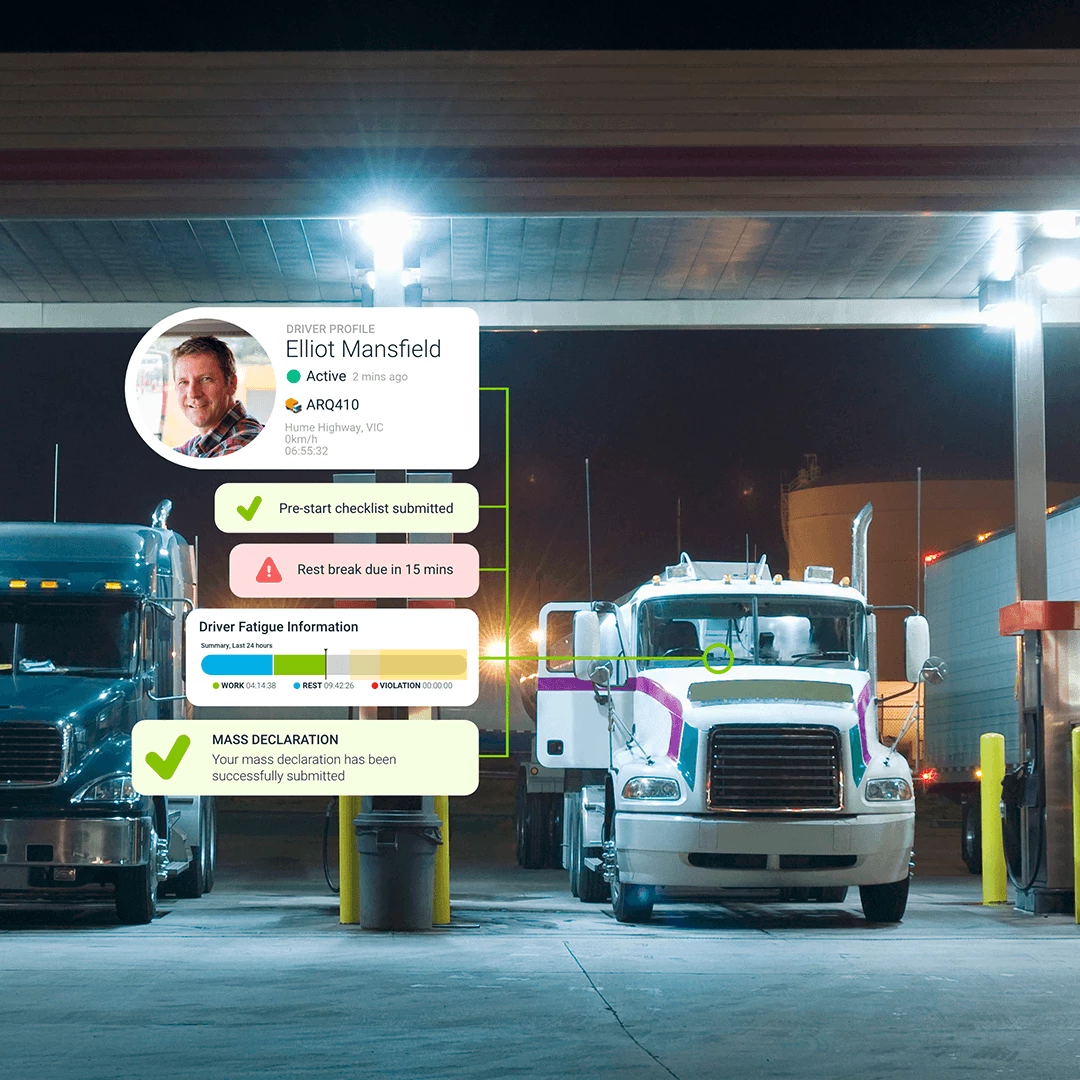
For Drivers: Clarity and Confidence on the Road
We know that you know when your body is tired and you need to pull up to rest, but fatigue laws across the nation specify hours of work and rest that must be followed. EWDs give drivers a clear view of their work hours against their ruleset and can reduce mental load by providing exact times ahead of rest breaks, allowing them to focus on the road and find a place to pull over ahead of time.
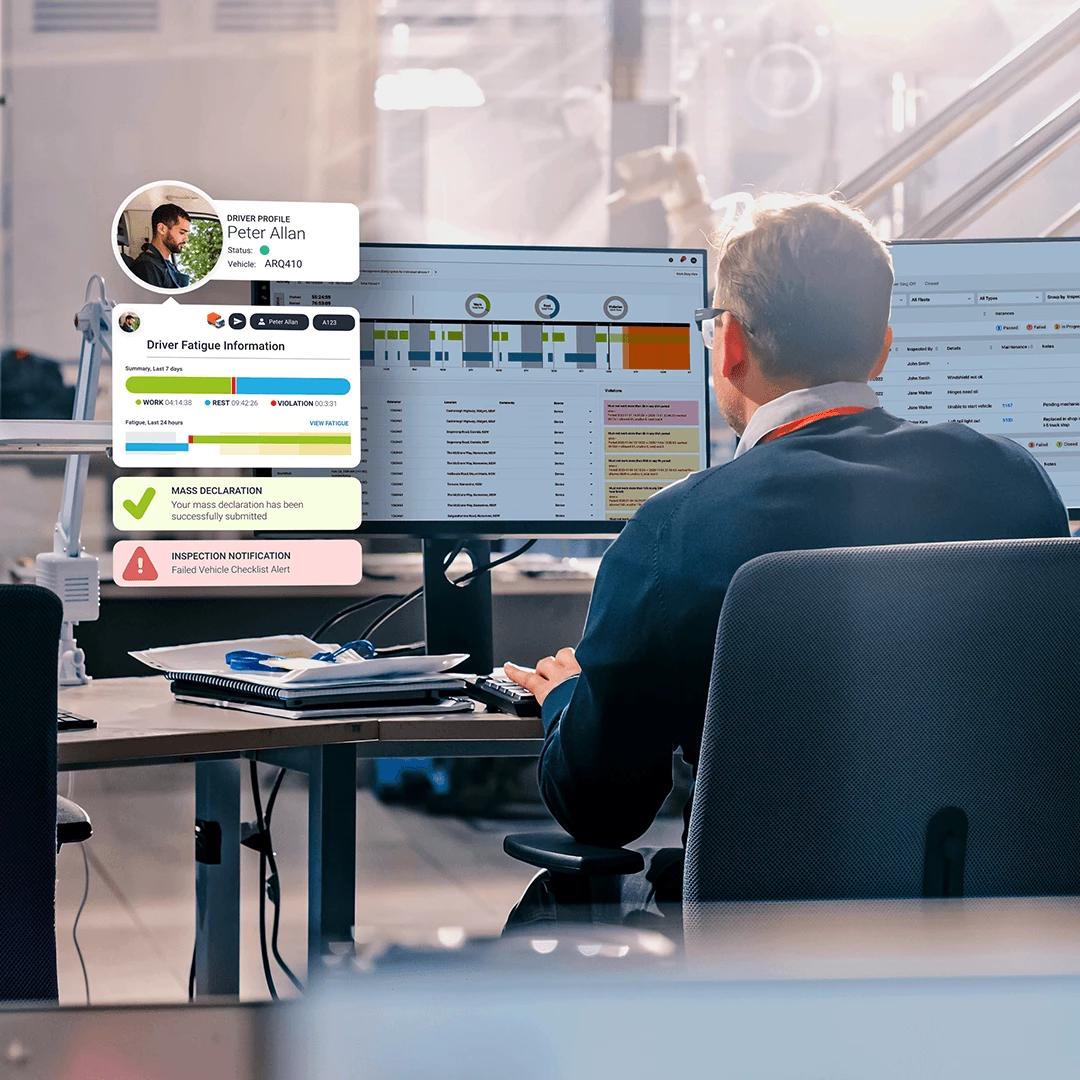
For the Back-Office: Real-time Support
With improved visibility, streamlined workflows, reduced administrative burden, you can centralise your work and rest records. Tasks like payroll, reporting, and documentation become faster and more reliable, and in some cases entirely eliminated, removing the need to chase paper logs or reconcile discrepancies so admin teams can get onboard to support the business with ease.
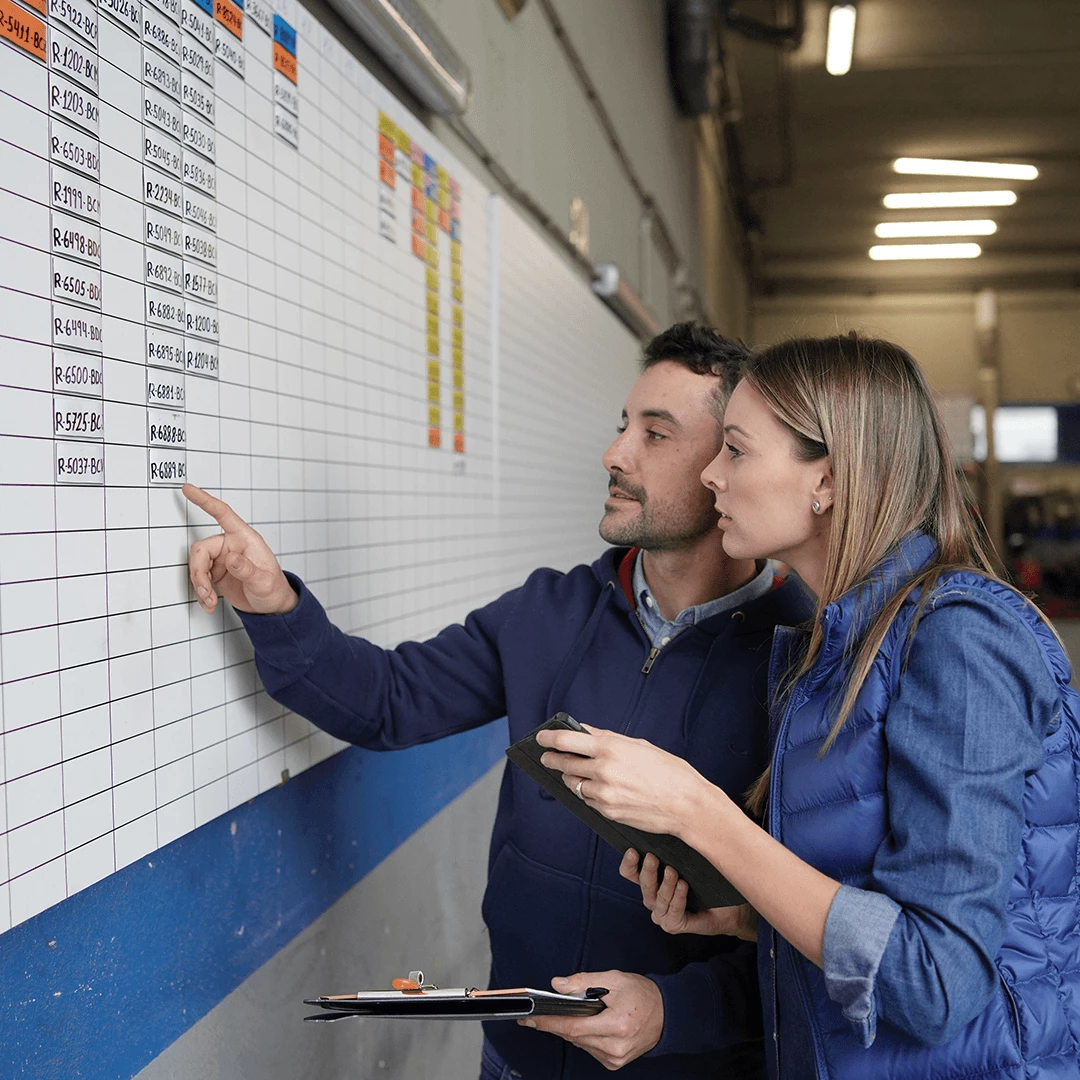
For Schedulers & Planners: Smarter Job Allocation
Fatigue heavily impacts planning and instead of managing based ib assumptions, you can enable real-time visibility of driver availability and scheduling based on actual remaining hours. This supports customer expectations, improve ad hoc task schedules, and support confident planning for complex or multi-day jobs, with safer allocation aligned to fatigue limits.

For Fleet Managers & Compliance Teams: Proactive Risk Management
EWDs deliver visibility that paper systems cannot match, as you can monitor drivers through a live dashboard, alerted to potential breaches early, and act immediately or provide coaching where needed. Audits are simplified with accurate, centralised records, while targeted coaching supports better compliance.

For Business Leaders: Better Operational Control
At a leadership level, data becomes a strategic tool. EWDs support better decisions through real-time and historical insights, clearer KPI tracking and improved utilisation without added risk. It reduces CoR exposure and drives efficiency across the operation. The result is fatigue management evolving from a compliance task into a lever for efficiency and performance.
Ultimately, when EWDs are embedded into everyday workflows across the business, they transform fatigue management from a compliance obligation into a connected system that drives safer, smarter and more efficient operations.
Future of Fatigue Management
The HVNL continues to evolve with a stronger emphasis on safety and accountability, CoR enforcement and real-time operational oversight. Emerging changes that shift toward a more flexible model, the Alternative Compliance Accreditation (ACA) Fatigue Templates & Tables will initially add complexity to fatigue calculations, while Standard Hours remain the same.
For many operators, manually interpreting and applying these rules will become increasingly difficult. This signals a clear shift: It’s no longer enough to prove compliance after the fact. Operators must demonstrate control in real time. EWDs don’t just help fleets keep up, they help them stay ahead. To find out more about the HVNL amendments of 2026, read more here >
From Compliance Pressure to Operational Confidence
Jarratt Transport faced a familiar challenge as their business evolved, shifting toward a larger in-house fleet brought increased Chain of Responsibility obligations and a growing need for tighter operational control. With more vehicles and drivers to manage, maintaining visibility over driver hours and fatigue compliance became increasingly difficult, creating pressure across both scheduling and compliance functions.
To address this, the company implemented Teletrac Navman EWDs as part of a broader fleet management system, moving away from fragmented processes toward real-time fatigue visibility and planning. This shift delivered immediate improvements, including full transparency of driver availability at any given time and more accurate, reliable scheduling.
Drivers quickly embraced the system due to its ease of use and reduced guesswork, while the business achieved 100% compliance across multiple audits. A clear example of how effective fatigue management translates into both compliance and commercial results. Continue reading more and check out the video below.
EWDs shouldn’t stop at compliance, they should drive meaning across your entire operation. If you’re still only scratching the surface, now is the time to move beyond basic usage and unlock their full value. With the right approach and technology, you can gain real-time control, improve safety outcomes, and make smarter decisions every day.
Ready to take the next step? Book a demo and join leading fleets across Australia that are turning fatigue data into smarter, safer, more efficient operations.
Build your solution and get a demo today
Additional Resources
You can find out a little more about our EWD solution and other digital solutions below
All statistics listed here in this article are from the Mobilizing the Future of Fleets Report: 2026 Equipment Utilisation Edition 2026